Not All Graphics Are Built the Same
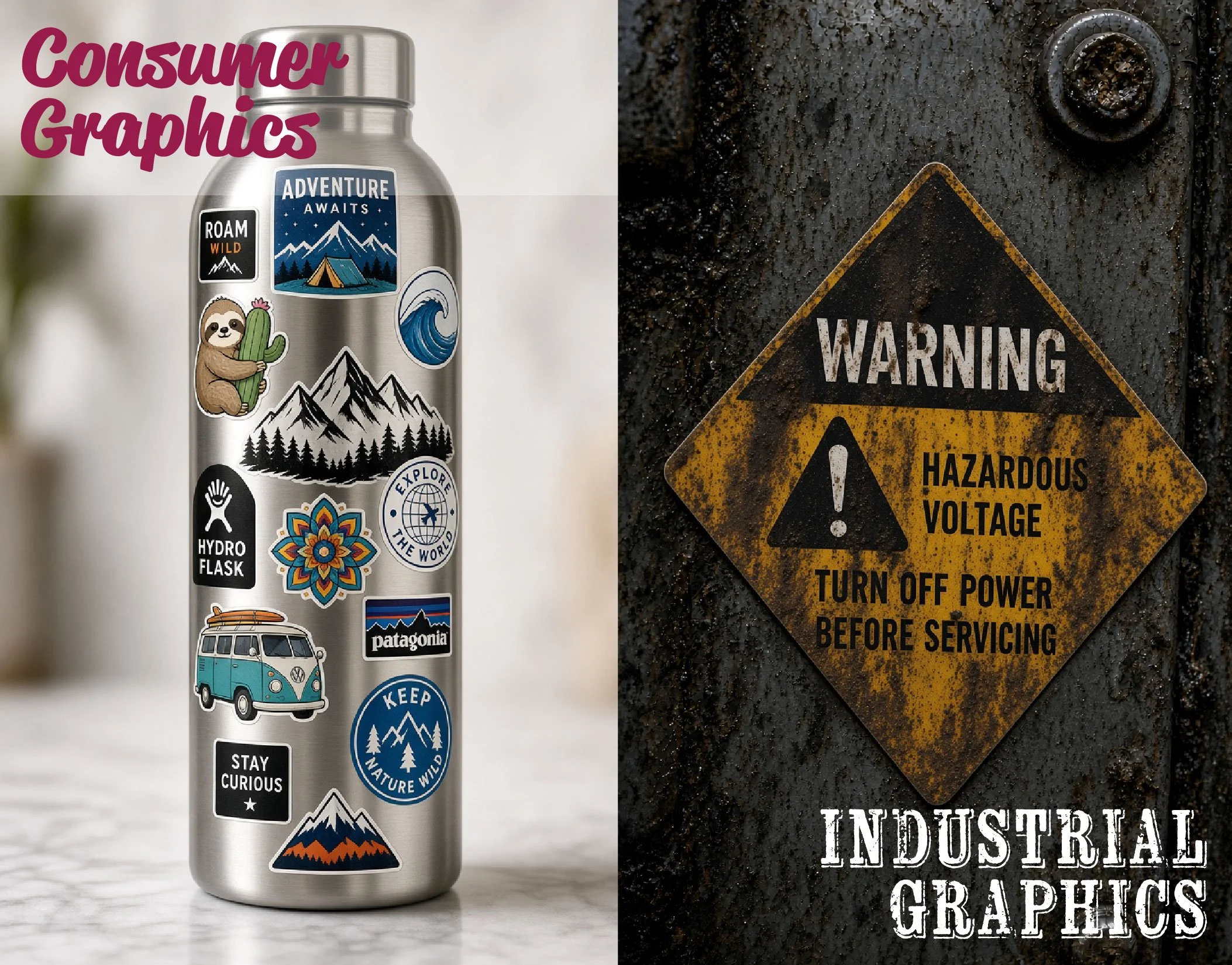
At first glance, a lawn tractor warning label and a water bottle sticker may seem nearly identical. On the surface, the difference is minuscule. Both communicate branding, operating instructions, and safety warnings. But underneath the artwork and text – the difference becomes crystal clear.
Consumer graphics are typically designed for looks and cost. After the sticker is printed, there’s no guarantee or concern for its longevity.
Industrial graphics withstand years of sun exposure, harsh weather, chemicals, abrasion, temperature swings, and demanding daily use.
For OEMs, understanding that distinction is essential. Because when a graphic fails, it is rarely just a cosmetic problem. The most expensive decal is rarely the one that costs the most to purchase. It is the one that fails in the field.
Consumer Graphics: Built for Everyday Environments
Best used for:
Household appliances
Consumer electronics
Toys
These products operate indoors where exposure to UV light, moisture, chemicals, and abrasion is limited. The graphics only need to remain functional throughout a relatively short lifespan.
Industrial Graphics: Engineered for Real-World Abuse
Industrial graphics face a completely different reality.
Common applications include:
Generators
Agricultural equipment
Construction machinery
Marine equipment
Industrial controls
Outdoor power equipment
Heavy trucks and trailers
They work outdoors in dirt, weather, chemicals, vibration, and constant use.
A graphic built for a coffee maker will fail quickly when exposed to the conditions of an over-the-road semi-tractor trailer.
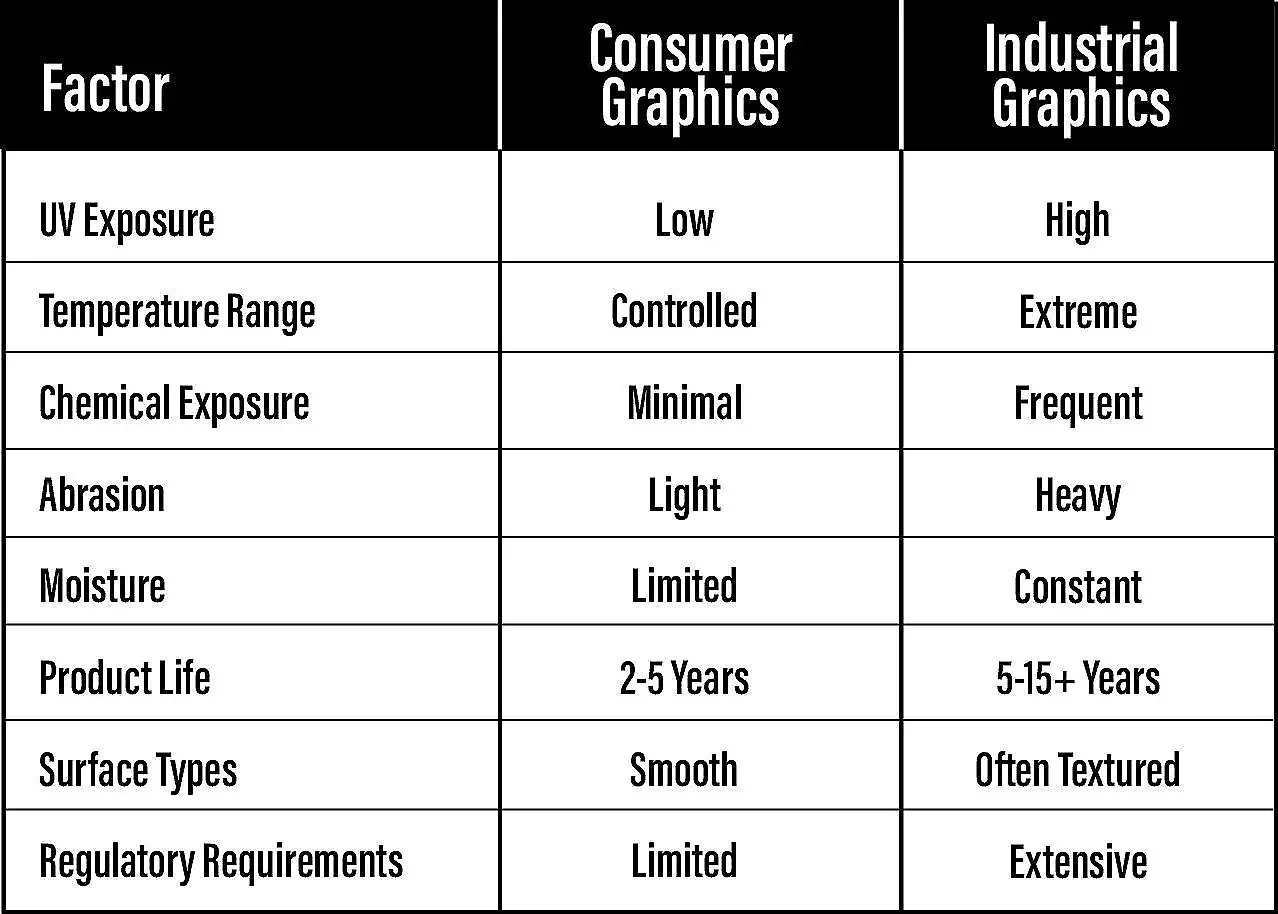
Design Factors
When building graphics, the environment should drive the specification, not the appearance. Asking the experts (like Romo) will ensure the material, adhesive, and ink system match the environment.
Regulatory Compliance Raises the Stakes
For many OEMs, graphics serve a purpose far beyond branding. Industrial graphics often communicate information that MUST remain legible for the life of the equipment, including:
Safety warnings
Operating instructions
Compliance information
Serial numbers
Emissions labels
These agency have requirements that must be met:
UL (Underwriters Laboratory)
OSHA
ANSI
If critical information becomes unreadable after years of outdoor exposure, the consequences can extend well beyond aesthetics and into safety, compliance, and liability concerns. Romo works with these agencies and understand what’s necessary to stay in compliance.
The Most Expensive Decal is the One that Fails in the Field
Selecting a lower-cost graphic for an industrial application can create costs that far exceed the original savings. And the unthinkable could happen.
Warranty claims
Field replacements
Equipment downtime
Regulatory issues
Customer dissatisfaction
Brand damage
The reality is simple: replacing failed graphics in the field is always more expensive than getting it right from the start.
Seven Questions Your Supplier Should be Asking
How long must the graphic remain functional?
Will it be exposed to UV sunlight?
If outside, what part of the country?
Does it encounter chemicals?
What temperatures swings will it experience?
What surface will it be applied to?
Are there regulatory or compliance requirements?
The answers to these questions will reveal whether the decal is consumer or industrial.
Romo Tech Tip
The most expensive decal is rarely the one that costs the most to purchase. It is the one that fails in the field.
At Romo, we believe graphic specifications should be driven by performance requirements, environmental exposure, and proven durability testing. Because when equipment is built to work hard, the graphics should be engineered to do the same.