
When it comes to durable decals and labels, the printing method matters just as much as the material itself. One of the first questions our team asks is: Will this graphic be surface printed or subsurface printed?
The answer depends on where the decal will live, how it will be used, and what it needs to withstand over time.
Subsurface Printing
Built for Extreme Durability
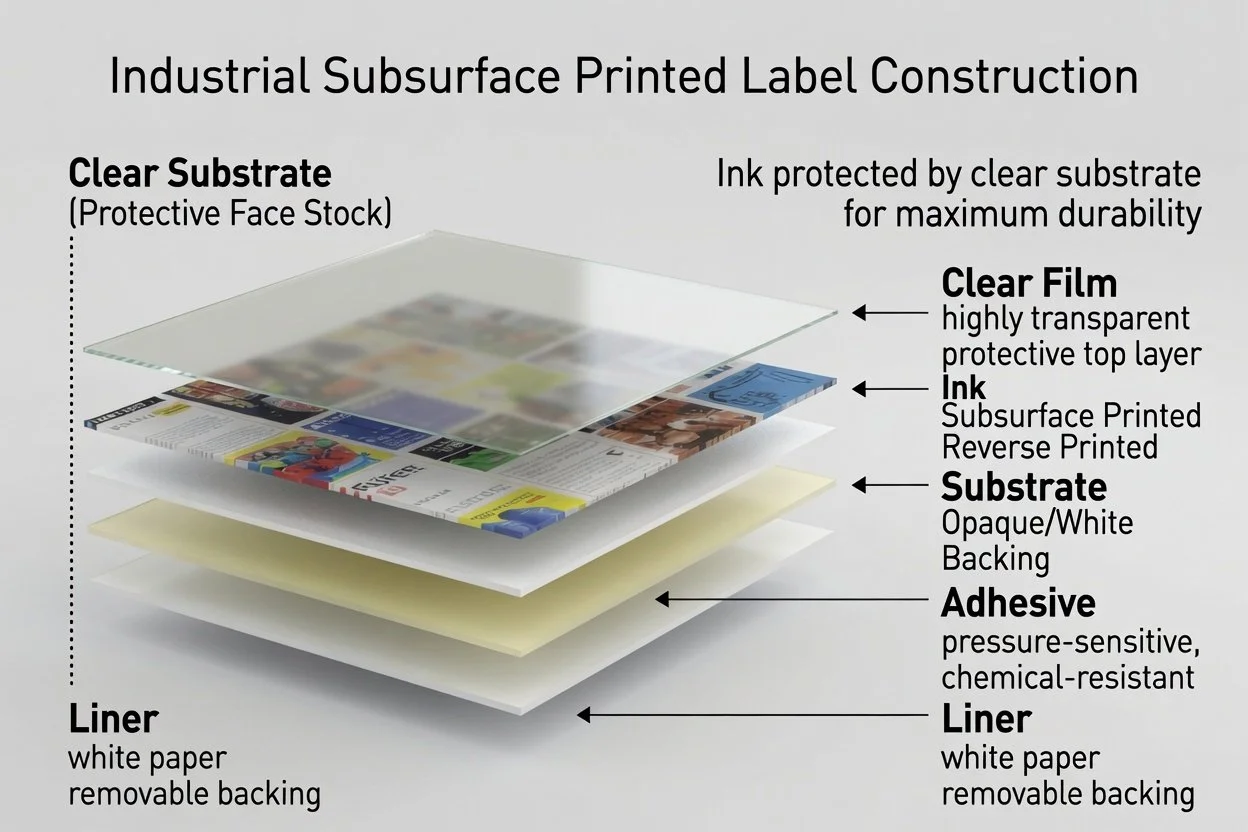
Subsurface printing places the image on the back side of a clear material, printed in reverse so it reads correctly when viewed through the face of the decal. An adhesive layer is then applied over the printed side, sealing the graphics behind the material.
Because the ink is protected beneath the surface, subsurface printing delivers outstanding resistance to abrasion, chemicals, moisture, and repeated handling. While the process is more complex—and typically more expensive—it offers unmatched longevity in demanding environments.
Subsurface printing is ideal for:
Frequently touched interfaces and controls
Fitness equipment
Industrial control panels
Appliance control surfaces
Automotive dashboards and controls
Equipment cleaned regularly with harsh chemicals
Commercial kitchen appliances
Medical devices
Hospital beds and equipment
Long-life outdoor identification and branding
Generators
Power equipment
Agricultural machinery
Heavy-duty industrial equipment
Bottom line: If your decal is expected to endure years of wear, cleaning, or environmental exposure, subsurface printing is often the best investment.
Surface Printing
Versatile, Vibrant, and Cost-Effective
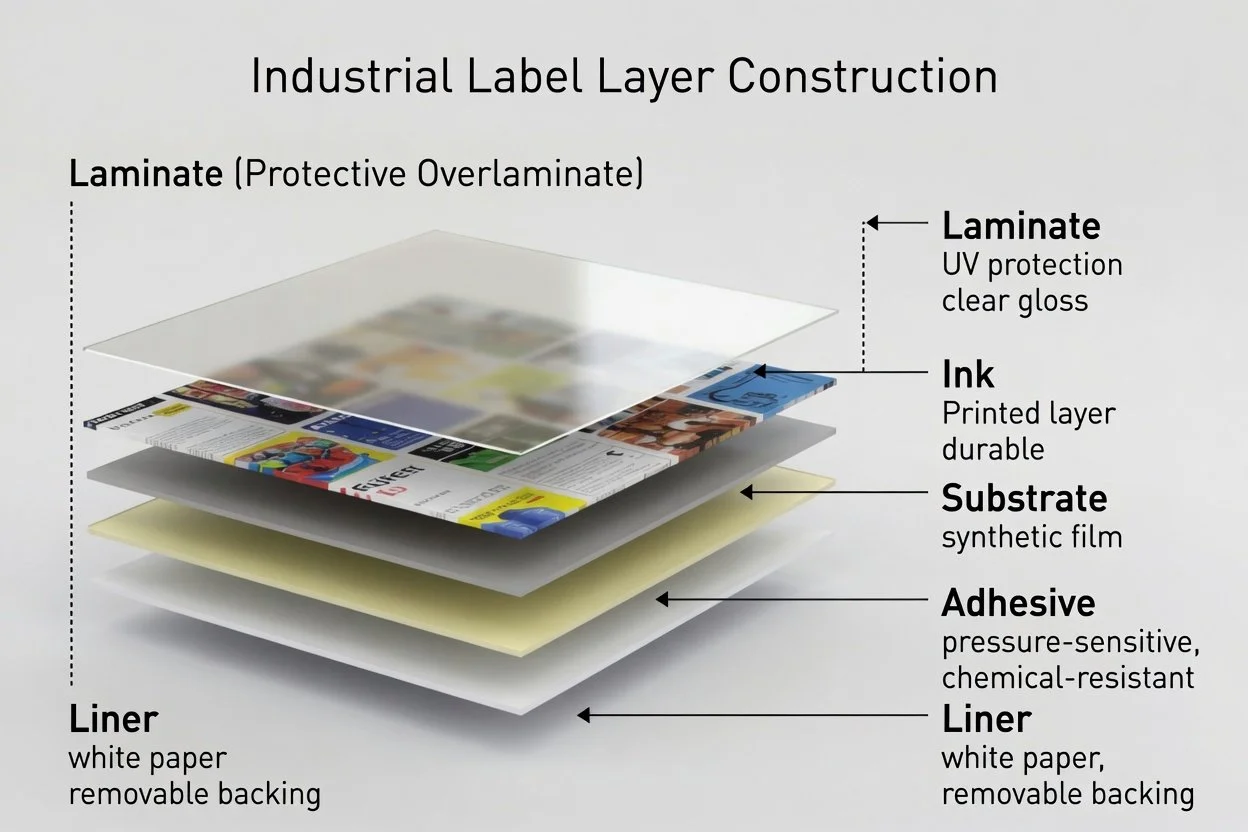
With surface printing, ink is applied directly to the face of the material. To enhance durability, a protective clear coat or laminate can be added to shield the graphics from abrasion, UV exposure, and everyday wear.
Surface printing is a simpler, more economical process that delivers excellent performance for a wide range of applications.
Surface printing is ideal for:
Brand and logo identification
Projects requiring precise color matching
High-impact, vibrant graphics
ANSI and ISO-compliant labels
UL-recognized constructions
Custom sizes and shapes—from small equipment labels to large-format graphics
Warning and caution labels
Decorative product graphics and overlays
Bottom line: If your application requires strong visual impact and reliable performance without the extreme durability demands of subsurface construction, surface printing is an excellent choice.
Not Sure Which Option Fits Your Application?
Every environment is different. From industrial equipment and medical devices to consumer products and outdoor power equipment, the right decal construction can make all the difference in long-term performance.
At Romo, we help customers select the best printing method based on durability requirements, environmental conditions, regulatory needs, and budget—so you get a solution that performs exactly as intended. Contact our team and we'll help you find the right fit.